
Recently, the students of Templer Park International School (TPIS) had an exciting time stepping into the shoes of young scientists through fun and engaging hands-on experiments! From exploring the mysteries of the Earth’s seasons to discovering how bone strength works, our classrooms were filled with curiosity, teamwork, and discovery.
Our Grade 5 students travelled through space — right from their classroom! Using a shoe box model and a torchlight, students recreated the movement of the Earth around the Sun to understand how different seasons occur. The torchlight represented the Sun, while the model helped students observe how sunlight reached different parts of the Earth during its movement.
Through this interactive activity, students were able to:
- Understand how seasons are formed
- Identify how sunlight affects different hemispheres
- Explain the relationship between Earth’s movement and seasonal changes
The activity became even more exciting as students experimented with angles of light and discussed why some countries experience summer while others experience winter at the same time. Learning science truly came alive through this creative hands-on experience!
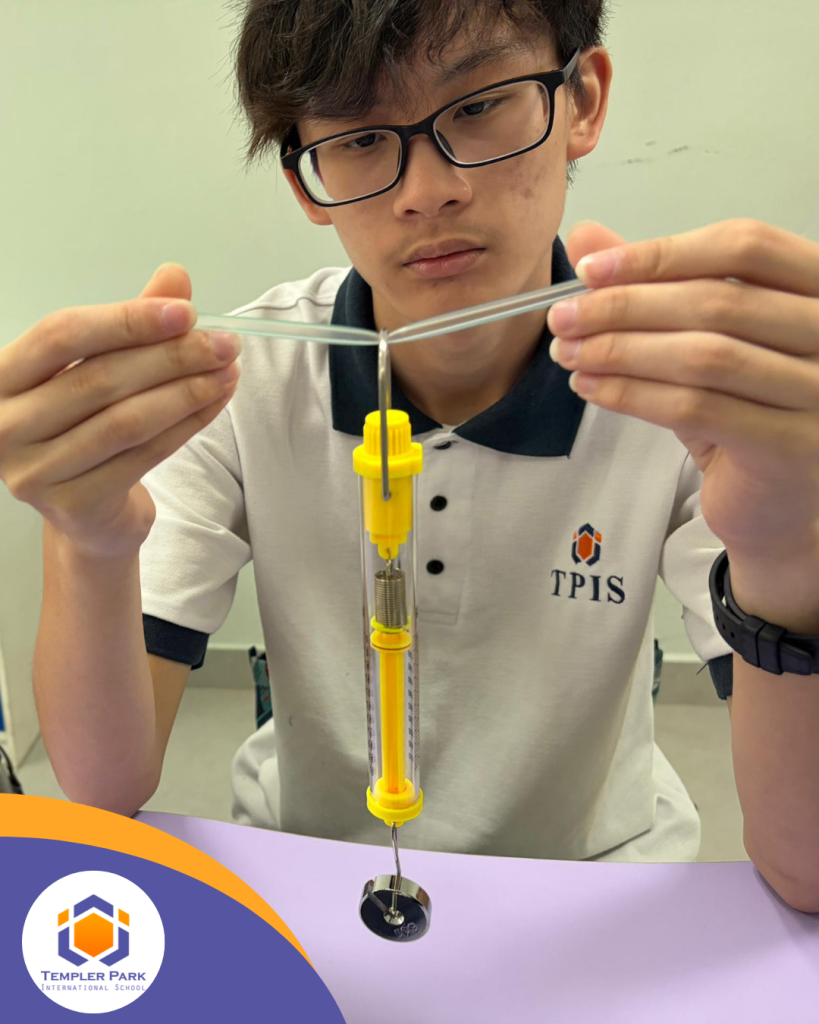
Meanwhile, our Grade 8 students conducted an exciting experiment to investigate the relationship between bone thickness and force. Using thin straws to represent thin bones and thick sticks to represent stronger bones, students tested how much force each material could withstand before bending by using a force meter.
Through this experiment, students learned:
- How bone thickness affects strength
- How to measure force using a force meter
- How the experiment relates to real human bones
The students were fascinated to discover that thicker “bones” were able to withstand much more force and load compared to thinner ones. This helped them better understand why strong, healthy bones are important for the human body.


At TPIS, we believe learning is best experienced through exploration, creativity, and hands-on activities. These engaging science experiments encouraged our students to think critically, ask questions, and connect classroom knowledge to real-life situations — all while having fun!